Tuesday, August 2, 2011

Is Ben Affleck my Soulmate?

When Ben Affleck's character, Doug MacRay, reads in voice over that it's never too late to start your life over in the surprisingly good movie "The Town" (read my review here) it got me wondering. Can there be do-overs in life? And if not--at least second chances? Novelist F. Scott Fitzgerald depressingly said "There are no second acts in American lives." But what if that wasn't true? As you know (because you've been reading my blogs), I have recently been wrestling with this very notion of trying to reinvent myself after years of toiling in worker bee pods in cubicle-covered fields of Mister Charlie's Corporate America. Each day I enter that giant glass phallus of greed, I feel globs of my soul ooze away, right there in the four-story marble lobby next to the company's $10,000,000 giant mural. I disguise my disgust at this gilded cage by doing my work well and collecting a paycheck. But my creative side that has yearned to be free since my first attempted manuscript at age 8—the story of a dinosaur who lost its way, which was my first foray into existential narration—feels as shriveled and as vulnerable as Korob and Sylvia's true stick bug-like forms that die without the use of their powerful transmuter at the end of Catspaw--one of my favorite Star Trek: TOS episodes. I remember being struck by their ultimate loneliness and smallness. It still makes me sad. I don't want to end up smoldering away into oblivion with the world's eyes averted.

When I released my first book I sent out an email blast to hundreds of people to build interest in Solstice. I received many well wishes and congratulations, but curiously, an author friend sent me an interesting reply. He offered his input on my thirst for success: "...Here is a telling statistic: there are only about 300 full time authors in America." He went on to say that even by selling 10,000 books I would only stave off poverty and reality for about a year. "The present set-up of the book market is not really conducive to success for the first-time author." Of course it wasn't all discouraging. He ended the email with: "However, hopefully you will be the exception."

My writing is not a vanity project (well, to a certain extent at least). I think all creative people have an inner desire to be praised for their work. But like Affleck and his gang of toughs learned in the movie "The Town," life has a way of drawing you back in. During the last several years I sometimes felt like Kali, the massive asteroid from Arthur C. Clarke's Hammer of God, was threatening to fall upon me. Looming in my horizon were the issues of dementia with my aging mother and financial calamity. I eloquently bellyached about it here. But this predicament almost seemed premeditated; an entrapment of sorts. With every joy and elation came a damnation. I was beginning to think I was cursed. I had been writing about witchcraft for almost 5 years afterall. I heard friends and celebrities toss around words like "passion" and "calling" which were abstract concepts to be sure. If God could be so straightforward with Jada Pinkett-Smith and JK Rowling it seemed my calling was printed on an index card at the bottom of a tree in a dense wood behind a giant prehistoric fern that I was supposed to find in the midst of a downpour. Over the past several years I've seen friends start successful career-changing endeavors on nothing more that whimsy, and even though I am ecstatic for their good fortune, I oftentimes feel like Celie dogging that mailbox while asking Mister "Anything come for me?"

Twice this past week I've heard two young men tell me that they want to do something different in their lives although they habitually procrastinate. I said to them, "Do it before it gets too late; Look at me." But then later I thought: Why is it too late for me? Now, I don't want to keep ladling on the complaints so I must recognize my part of the equation. I feel that I am in a renaissance of my life where I recently have reached a proliferation of work. I've written and created more in the last 6 years than I have in the previous 40. Maybe I'm a late bloomer. A second "careerer." Famed French director Robert Bresson, who was called the patron saint of film, didn't start filming until his mid 40s. Rodney Dangerfield sold aluminum siding for 15 years before getting back into show business at 45. Colonel Sanders didn't franchise his 11 herbs and spices until he was 65 after many years of failed ventures. And my personal favorite (and yes because he's a writer and, yes, because he's the author of one of my all-time favorite books), Richard Adams, didn't publish Watership Down until he was almost 53. So maybe I should shake the detritus of dispair from my shoes and forge ahead like a good rabbit should.


But one thing I've learned in this ordeal of life is to pray. Pray not for the material but the circumstance to better myself and the world I live in. Now, when I say prayer I don't mean the "Lord gonna bless me with a man and some money 'cause I sure done worked hard" kinda prayer. What I mean is a prayer for an inner peace that would lead you in the direction you must go, remembering along the way to stop and remember what you're working for. To pray and be thankful that you can work and work hard toward your goal. To say that you are grateful to get this second chance in a infamously unforgiving world. My hardships and trials will only serve as more coal for the engine of my creativity. I must learn to savor these times because many people only have mediocrity ahead of them and no clue how to end it. Maybe that's the point: To get out into your own life. Maybe it's not one index card but many index cards. Bad romantic comedies have taught us that there is ONLY ONE true love of your life. My ex said it best: "What are the odds that there is only one soulmate for you. With 6 billion people you probably have hundreds maybe thousands of soulmates. You've just got to find at least ONE of them."

And just like my old buddy Doug MacRay in "The Town" may not have found his soulmate, he did, however, find a way to try to get a second chance. And so can we all.

Friday, July 1, 2011

Darwin wasn't naturally selected

Darwin Dies First
You know it's bad when the simple query, "why does the black guy always die first?" returns 7,990,000 results in 0.14 seconds. This specter has once again raised it's head this summer—no, not the jive-talking gold-toothed jiggabots of Transformers: Revenge of the Fallen infamy—but in the movie X-Men: First Class. It would seem that one character won't be making it to the second class. Can you guess which one? I must confess, for the record, that I have not been a fan of any of the X-Men adaptations since Storm uttered one of the most sorry-ass lines ever written for a movie. EVER. "Do you know what happens to a toad when it's struck by lightning? The same thing that happens to everything else." I usually give filmmakers a lot of latitude when it comes to imagery when dealing with black people. I liked the 1986 musical, Little Shop of Horrors. Some critics and many friends have debated me over Levi Stubbs' voice performance as well as the architecture of the juicy red-lipped carnivorous vegetable Audrey 2. I wasn't put off by it and actually saw the satire of a cool R&B-singing plant helping Rick Moranis' pipsqueak Seymour Krelborn get the girl, all the while priming earth for conquest.

Being somewhat of a visual anthropological hobbyist (which is the study of culture(s) through films, photography, et al) I've been fascinated with imagery since early childhood. As a lad in the seventies I consumed a lot of racist material in the forms of cartoons, comic books and movies. From the black maid whose ashy legs and droopy stockings were all we saw as she bounced around screaming "Hep me! Hep! Itsa mouse!" on Tom and Jerry; to the creative leap many comic book writers / artists made by putting the moniker "black" in front of a black character's name as if we couldn't tell he was black by the way he dropped his "g"s when speakin' or his 3-foot wide afro-shaped helmet a la Black Lightning. Jared M. Breaks it down here. Let's not forget how Jeff Burton's Dodge, the quiet cerebral antonym to Charlton Heston's swaggering mid-life machismo, ended up stuffed and on display in the original (and still the best) Planet of the Apes. I guess that goes to prove that a black scientist ain't nothin' but a sandwich even in futuristic dystopias. Thank God for Star Trek--a place in the universe where people of different cultures, races, genders, and even species, could come together and become a grander mosaic. Here, the characters recognized that in their disparateness was their greatest strength. Whoopi Goldberg, who later played Guinan on Star Trek: The Next Generation, described Uhura as a role model for her, recalling that she told her family, "I just saw a black woman on television; and she ain't no maid!"

As a child I could not articulate any of these feelings of dissatisfaction. I just observed and absorbed. I just knew something—or an entire race of people—was missing. I think this, in part, fueled my desire to create. All too often we of the African diaspora are marginalized both by mainstream Hollywood and Madison Avenue. If you recall the commercials of the 1970s-80s, and if you saw brown faces in them, all you got was a lot of "sangin'" and dancin', as if black viewers could only digest the content if it were attached to musical numbers. My friend, L. Trey Wilson, the brilliant playwright, once told me of a party he attended where he met the producers of the groundbreaking Showtime series, Queer as Folk. One of the producer's response to Mr. Wilson's question of why a show about gay people was made up of an entirely white cast was that he felt he couldn't write an authentic black gay character sufficiently. Translation: So, instead of doing research or the unthinkable of hiring a person of color (there's no room for affirmative action in gay cable) they decided to omit black queers entirely. Really? Shylock said it best in Shakespeare's The Merchant of Venice:

If you prick us, do we not bleed? if you tickle us, do we not laugh? if you poison us, do we not die? and if you wrong us, shall we not revenge? If we are like you in the rest, we will resemble you in that.

At least in the original UK version, created by Russell T Davies of Doctor Who and Torchwood fame, one of the main gay boy's closest friends was a biracial girl named Donna. She had the best line of the entire series when Nathan was complaining that his mother was persecuting him and snooping through his things because he was gay. Her quip? "I'm black and I'm a girl. Try that for a week!"

So often we complain about the establishment and yet we perpetrate the worst kinds of stereotyping. I'm sure I will make many a enemy saying this, but I must take E. Lynn Harris and Tyler Perry to task on their overly melodramatic archetypes. Villainous Stephen Harris (Diary of a Mad Black Woman) and Brain White's (I Can Do Bad All by Myself) characters were written so broadly that I thought each was going to break out in maniacal laughter while twirling an imaginary mustache. And let's not forget to mention the hypocritical morality play: The Family that Preys. The overwrought plot's central adulterous affair between a black woman played meanly by Sanaa Lathan and her philandering boss, Cole Hauser, lacks sex-appeal or even sleeze. Of course, when the shit gets stuck to the Gucci loafer, the black woman bears the brunt of the fallout (losing her job, house, Mercedes AND husband) while her white lover continues in his marriage running a multi-million dollar corporation. Yancey Harrington Braxton and Basil Henderson were so patently Dynastysian in Not a Day Goes By and Mama Dearest by E. Lynn Harris that it was like reading flash cards written as Cliff Notes for Melrose Place or The Colbys for people who didn't understand all the pretentious campiness.

Ironically, it took a gay southerner to buck the kill-off and remediate the black characters to obscurity. Alan Ball's Trueblood took Lafayette (who was killed early on in Charlaine Harris's fist novel in the Sookie Stackhouse books) and Tara (an acquaintance of Sookie who is underused in the novels) seriously. He created great characters for two great actors; not only have their roles been expanded in the HBO smash-hit, but they've become fan favorites. They are never fodder, filler or throwaway characters yet they enrich the show. Devona Walker explains it here. Which goes to prove: when you see things in living color they become much more vivid.

Thursday, June 2, 2011

By means of perfect selection

Daryl T Sturgis 1987 JCSUAre you doing what you're meant to be doing? And if you're not do you know why? In 1987 I knew what I was born to do. Since then not so much. With the exit of the Oprah Winfrey Show (heavily-laden with regular doses of platitudes, gratitudes, girl power and giveaways—You! And you! And you are going to Austraaiiiiiilia!! There is an absence of the feel-good-about-yourself politicking this soft, brown mother of the American exorcism-of-inner-child-pain-by-broadcast has taught millions to cherish. Ironically I've been ruminating over the very subject of "my passion" and "my calling" for the last few weeks; that coinciding with Oprah's last show was either devine or fate, anyway it gives me raison d'blog.

Unlike many I didn't take some lighting quick road leading me straight to my life's work. There were no 4:00 am whispers in the dark heat of a southern night—though I did have a dream of God that we'll get to later—imprinting me with an internal Marauder's Map of life's foul players visible for me to see and therefore avoid. Pride, hubris, debt, bad lovers, missed opportunities, illness, chicanery and pain. It seems that some are given clear instructions. Or rather they find that perfect mix of ambition and alchemy to influence the universe into absolute cooperation. This begs the question: was Oprah born or was she made? I've discussed my potency being gelded by life here. But those words were written during a particularly high period of lowness, self-pity and vexation. I have recently begun laying a course trying to chart my way through the fog of my life. Not trying to sound mawkish but I still remember those days at Johnson C. Smith University making everybody laugh when my best friend Terence Powers (RIP) and I, at the urging of our classmate Tini, would act out the seduction scene from John Boorman's classic Arthurian epic Excalibur. His Merlin to my Morgana; "Merlin, give me the Charm of Making. Anál nathrach, orth’ bháis’s bethad, do chél dénmha" I would emote emotionally. Many uncontrollable giggling sessions were due to this role play during college nights where we would discuss metaphysics, race, sexuality and the indestructibility of thought. As if we were chatting at the Deux Magots or the Algonquin or members of the 306. Of those sessions more than most were fueled by cheap weed and even cheaper beer but scholarly discourse did occur on occasion. But those far off dreams of my early twenties seem so clear yet so distant. Like when Solstice ruminates over her long distant past in The Goddess of Light.

Her fingertips were dirty, blemished from the oil and dirt from the withered old sheets of paper bound in a crummy leather book. Slick dark circles enumerating the years that now spanned before her, hidden in the folds of these decrepit old journals. Solstice cracked open one of the dusty books and read from it as if it was scripture. Her growth as a tyrant marched from the pages like whispering embers rekindling a sodden log. Tendrils of despair and hate populated those empty spots in her memory where nothing resided but the void. The void that comes with living a long and hateful life.


It was all so important and clear then. I knew exactly what I was meant to do. Terence had a dream of being a grand essayist Terence Powers JCSU 1987and poet living on the left bank in Paris. I was going to go to NYU film school then on to become a great film making living in Harlem. Let's see how that all worked out shall we? I am living in Harlem and as of yet my movies haven't left my desktop (unless one of you has blackmail in mind) and Terence did live in Paris until the French government asked him to leave when they found him in an illegally sublet apartment six years after his work visa expired. I felt film was my destiny and purpose in life. I made my first movie in 1974 when I was eight years-old with my mother's Yashika 35mm camera; where my Planet of the Apes action figures crashed-landed their spaceship in Candyland; Molasses Swamp was quicksand and there was a tribe of blood thirsty head hunting Lollipops. I created a slideshow with special effects (I drew laser beams on each slide with a magic marker). My mother and father was an audience of two and I remember having a tantrum when you couldn't see the laser beams when it was projected onto the screen. Next came the Building that had an Earthquake. It was a cross between The Towering Inferno and the Poseidon Adventure. A group of survivors in the world's tallest skyscraper had to make their way through debris after the building was bombed. There was murder, rape, intrigue and redemption. I kept a list of all my movies (and their running times by using my cousin's borrowed basketball timer). It was my mission in life and I was passionate about my own little Hollywood right there in Old Town. I created so many movies that for several years I even had my own awards show with a ceremony and everything. I really had big dreams.

Daryl T Sturgis natal chart

Now both God and my zodiac has given me a mission that I haven't the slightest idea what that mission is. It shouldn't be this obscure. Maybe I should make a short film about finding it. Which leads me back to the dream I spoke of earlier. One summer between the fifth and sixth grades I had a nightmare. I was walking down the street between my mother's and my cousin's houses. Usually I would cut across the field but this time I was on the blacktop, then a gravel road. As I approached their driveway God approached me. I stopped and looked at him. He said "Daryl, I have a mission for you." Just as I asked him what that mission was an enormous hand reached out for me from behind a row of hedges and blackberry bushes. It was red and covered in pus dripping boils. It grabbed me by my white three hole belt that held up my red lee jeans and pulled me out of my brown earth shoes! I woke up screaming never knowing what my mission was. And that's been my problem ever since. Once for fun I looked up my horoscope chart online and a coworker passing-by saw it. She remarked that I had a kite aspect in my natal chart. When asked she said "The Kite pattern is a fairly rare chart configuration." She went on to say that people with kites are usually gifted and have a "mission" — YIKES — in life. There will be great difficulties but once started on their mission "then a kite pattern makes life fairly smooth." Madonna has a kite and *GASP* Oprah does too! Does this mean that I was born with some purpose in mind by the universe? Its a struggle many share and one that particularly perplexes me. I need to find out what my mission is. Besides it gives me another reason to blog next week.

Thursday, May 19, 2011

Repunzel's Mother

There's an (in)famous story that I've told over the years, that when reminded of a particular childhood game my mother and I Daryl T Sturgis with blonde hairplayed—I say my mother conveniently forgot about it while others have said she blocked out the horror—can be said was the beginning of my creative life. It goes like this:

As a child I loved fairy tales. Castles, witches, evil-doers, beautiful damsels, dashing princes, wicked demons and fabulous (yes fabulous) dragons. I cherished the books my mother bought me. I still have a copy of a 1962 edition of The Wonderful Wizard of Oz and a now battered Grimm Brother's Fairy Tales that I still read every time I visit her. But my all time favorite story was Repunzel. Okay this is where the tale gets dicey. My mother's house has a curved staircase that descends from the second floor and opens onto a foyer. My room was on the side of the house the directly overlooked the entrance hallway. I used to sit tingling with anticipation in my room with the door closed, a yellow sheet tied around my head awaiting my mother's call. She would stand at the bottom of the staircase and shout. "Repunzel! Repunzel! Let down your hair!" I would immediately rush from my tower cell and throw my fabric-cum-hair over the railing so that my Mother, the Prince, could climb my cotton treses to rescue me! I still laugh every time I tell that story. See the above sentence and draw your own conclusion on why my mother does not remember that game!

Now I've always said, indulgence not withstanding, that you can not be your true self until you are otherwise inspired. Now it helped that my mother is a musician and writer herself. But imagine being able to completely be yourself in your own self-appointed world and it be alright with whomever is important to you. Clichéd as it may sound—but no man is an island. We are put together from strings of experiences (both good and bad), peppered with a dash of youthful hope and inspired by some one who is nice, encouraging and forgiving of our foolishness and mayhem. When I first started writing seriously I envisioned myself the Grandma Moses—who didn't turn to painting until her seventies—of the literary world. To take my maturity and circumspection and produce a world class novel and at 43 years-old become my generation's Toni Morrison. I wrote several authors whom I admired seeking novice advice. Out of the five that I wrote only two responded. Looking back on it I probably seemed like a deranged fan, but both of these gifted and special people gave me their personal contact information and invited me to call them at anytime. Could you imagine that response now (this was 15 years ago) what with digital identity theft, online bullying and e-stalking at its zenith. Over the years I've come to know them in professional and somewhat personal fashion. I congratulated them on their successes and asked them many, many, many, many (can't say many enough) many questions about writing, publishing, etc. They took the time and patience to answer my questions and provided me with the encouragement a fledgling artist needs. James Earl Hardy told me to stay true to my work and Octavia Butler schooled me that I would be "rejected again and again and again". I can't tell you how many times she said that AND and how many times I have since been rejected. Again and again and again. But they both inspired me to be a better writer and to hold on and persevere.

It should be one of our purposes in life to inspire others to do greater things. 2011 has been a tough year for me. You can read my desultory rant here. Suffering self-diagnosed dysthymia I wallowed in the torment of self pity. Helen Keller once said:

Self-pity is our worst enemy and if we yield to it, we can never do anything wise in this world.


She was a miraculous worker to me. Recently I was speaking with my mother and she said something shocking. She said I had inspired her to be more diligent and passionate about her own work. She wanted to put together a book of her poetry and songs. Then a few days later two other friends mentioned they too were inspired by my pushing through tough times and adversity to find the strength to carry on. Then came the kicker. A young man whom I met via the internet who happens to be a special needs individual said I inspired him to be more open and fearless when dealing with life. He said "I am outgoing, but its nice to have friends to move me to be better and greater then i have done on my own." He's in college and now there are plans to make a documentary and write a book about his extraordinary life. 'Amazing' I said during an instant message chat. All this time I had no idea the affect on him I had or other people for that matter. And that's the point. Just a little kindness and encouragement goes a long way. Roseanne Barr wrote on the fame monster in a recent piece I read in New York magazine. Read it. She discussed how fame can make you proud and vacuous. She stated, without a shred of immodesty, that she knows she was a feminist pioneer. She has indeed inspired many to understand that being different does not connate being less-than.

I thank all those who've inspired me over the years like old friends: Keith Randall, Javan Wakefield, Anthony L. Carter, Michael Luongo and even that evil Trini spectre Martin Arnold; and new friends like L. Michael Gipson who (though we have never met) radiates light and sage knowledge from the pages of his facebook profile so much so I can't wait to read his next update. I acknowledge all of the many mentors I've had over the years that challenged me to do better: Gerotha Gentry (North Forsyth High School), Dr. Peter Radcliffe (Johnson C. Smith University) and Alexander Plata (my old manager at Lechter's Housewares) to name a few. We should all follow in these first-class footsteps. Not great big giant Neil Armstrong steps but just everyday, ordinary, plain folks footsteps; to help each other become better people. To treat each other with respect and kindness. Not be dismissive or abusive. To push each other harder than ever to not settle for anything short of extraordinary. So if you happen to see a little boy running around with a yellow sheet tied to his head. Don't ridicule or bully him. Just tell him to let down his hair.

Monday, May 9, 2011

You can't cry on a diamond's shoulder...but they're sure fun when the sun shines

Elizabeth Taylor was, in the vernacular of the black gay community, the epitome of Elizabeth Taylor by Richard Avedonlegendary overness (pronounced OH-vah-nesssss—start with a full throttled and excited "O" and end with a very long and sassy "S"). Expansively she rained glamour and personality all over our landscape fertilizing our imaginations and libidos with bejeweled sirenship. The size of Ms. Taylor's diamond footprint (it is a form of carbon befitting her) was/ is celestial in scope. Her passions were unfiltered and never egocentric. She made humanitarianism and scandal look both tasty and easy. I've heard from several people who knew her, as was reported in the June 2011 issue of Vanity Fair; Tim Mendelson, her former personal assistant, states to Sam Kashner, "she had a genius for creating chaos around her." Throughout this pandemonium she would remain aloft floating above the bedlam serenely untethered to the drama she had concocted. Like the beautiful gardenias she cultivated in her garden, she was regal and bewitching while surrounded by swarms of deadly—but utterly harmless to her—bees.

Gwen and Gucci ca. 2010I mourn Elizabeth. She was one of The Ones, a select group of a few boldfaced names that I would have loved to get to know before they passed. James Baldwin I didn't get to know but Octavia Butler, thankfully I did. I admire Ms. Taylor for the obvious reasons as well as the not-so-apparent ones. She actually reminded me very greatly of my mother, not because of either woman's incandescent style or penchant for multiple marriages, but because they were both smart business women during a time when women "asked" not demanded and they were never apologetic for their flaws or accomplishments. La Liz (a name she hated) was branded long before we had LiLo, JLo, JHud, Branjolina, TomKat or any of the other silly concocted nicknames TMZ and Perez Hilton can slam together for puerile affect. Elizabeth was fiercely loyal to her friends and she was an independent thinker. How many of us go through life looking for the time or moment to make that move?--To not feel stupid or tense? To step up and say "Hello" or ask for a raise and push for better treatment? To affirm "I'm not looking for validation but to follow my dream and screw what people think?"

Elizabeth lived her life in the now. Her verbs were always action-oriented and in the present tense. She was always going, always doing, always living, always being...alive. What a grand feeling that must be! To live a life of bold unmuted colors. Not sitting back watching life but out in life not afraid of that first step (don't look down 'cause it's a dusey). We can learn much from these two women--Elizabeth and Gwendolyn. I've always said that Solstice was a composite of my mother and my two aunts. But I think there is some Elizabeth Taylor in Solstice too. They are both big, fast-living ballsy women. Man-eaters, husband-stealers. Sometimes Lilith, but never Eve. At home at the head of a bloodthirsty army or corporate boardroom as well as relishing their places in husseydom. They are gentle words casting softly or stunning vituperatives hurled venomously; not taking any shit from anyone yet looking-good-doing it kinda broads. Private lives lived publicly without appearing needy, ingratiating or panderous (sorry Nene.) And they both love jewelry. When Solstice was plotting the murder of a fellow student at university in my first novel Solstice, she chose to wear a matching amethyst ring and pendant set.

The next morning God sent an army of angels to wake up the sky ... It was something about Solstice that sullied them all, a dream of splattered blood on a freshly scrubbed floor. A cutting meandering fright, twinkling in that large and sparkly purple ring she had come to wear as of late. A radiant, glamorous peril in their midst.


But what Solstice, Elizabeth and my mother have in common is/ was an unwavering belief in their ability to affect the world around them, even in the tiniest ways. Most of us look for signs and augers to tell us if this decision or that decision is the right one. I think belief (or faith, if you will) is the obverse of the coin with fear. These women were bellwethers. The first person I knew who had a prenuptial agreement was not some Hollywood celebrity; it was my mother upon marrying her last husband. So many times we say the smart intellectual mind is too economical to think of faith but you must have it in order to not fear. Faith, that if we fail we don't lose but learn to carry on again. Faith, that whatever is fucked up at this moment won't or should not be our finality. It will get better. Maybe not easier, but better. Faith, that we are good--not pious--but good people. Faith that we are not vindictive, mean-spirited or dull. Faith, that even if seemingly naive, will lead you to the belief that all things will be all right. And as you believe your fears will dissipate. You soon realize that you can live your life on your terms and without the expense of repercussion from gossipers and haters. We can strive to be more confident and transcend the titles of "slut," "loser," or "faggot" and have the faith, as did Elizabeth Taylor, to embrace the entirety of ourselves. So I have embraced my drama, temper, procrastination and delayed adulthood and I go forth fearlessly and with faith (and hopefully with a David Yurman Armory sterling silver link with pave black diamonds bracelet I've been lusting for) and be my full fabulous-self.


Tuesday, May 3, 2011

As if hell was built for rabbits!

As if hell was built for rabbits! So is written my favorite line in HG Wells' The War of the Worlds. The book that has sparked more than a century of imaginations about the possibility of aliens and space travel. From the classic Cold War masterpiece The Day the Earth Stood Still to the saccharin ET the Extraterrestrial to the lumbering oafish Independence Day; we owe those death rays, warp engines and even the notion of the modern sexy sci-fi female character to HG Wells. Lt. Uhura and Trinity owe Miss Elphinstone—who in Edwardian England when "Ladies" were demure and chaste, showed her mettle during the panic to flee London by fending off rapists and attackers with a bull-whip, carrying a pistol and threatening to shoot another refugee's horse who was trying to take advantage of her and her sister-in-law—a debt of gratitude for being such a strong and determined woman.

When I first came across The War of the World's it was in the form of a part of a series of vintage literature that had been turned into graphic novels or comic books to make great books more palatable for kids. It certainly fired my own dreamworlds where as a child I created the galactic spanning empires of The Khran. The Khran's home planet of Khrantanium was millions of light years from earth. They settled on Jupiter thousands of years ago right under it's Great Red Spot. Cocoville their capital was a huge metropolis of over 1 billion people living in an area the size of Delaware. The city was as dense as Manhattan and had a 300-story skyscraper (take that Burj Khalifa) that soared to over 4,100 feet; a subway that traveled at speeds of 1,000 miles per hour. There were posh neighborhoods like Auznia and Bandragina, bad areas like The Pits and Merchosine; I even had urban renewal projects called Quadroplexes where the city would raze 16-square blocks of decrepit housing at a time and build huge 50+ floor residential blocks with open air parks and public transportation to help middle and low income Cocovillians have access to better living. I guess it was the Aquariun in me to be so civic-minded even in creating adequate housing for hardworking alien colonists.

Unlike many other 19th century speculative fiction writers: Jules Verne (whose work was often a hoity toity mix of condescending smarty-pants science fiction) and Bram Stoker (whose Dracula is nothing more than an effete and overlong pulper), Mr Wells (without the period as the British love to do) was democratic in his writing. It wasn't by random chance that the aliens landed in the middle-class—don't think of it in today's socio-economic terms. The middle classes in 1906 England were hard working often downtrodden and put upon people. Here's a little primer—village of Woking. In his book there are no muscular former marine or special forces officer with tidy hair and flat abs who have nothing left to live for; or a young plucky kid carrying the secrets of universal (or at least terrestrial) salvation in his blood. The narrator of The War of the Worlds was an everyman just describing the horror that he witnesses. He travels the English countryside without fear and so is revealed what lies at the heart of this book. The nature of fear.

Not just the fear of the unholy and truly alien Martians with their tentacles and need for human blood. But the routine everyday mundane fear that keeps us tucked away imprisoned in our orderly taxpaying, Royal Wedding following, saying "bless you" to a sneezer, going green because it helps Mother Earth, I'm so sad that All My Children is going off the air lives. When all hope is lost the unnamed narrator comes across a soldier in hiding; the surprising philosophical discussing that ensues sticks to my brain and becomes more powerful as I get older. This artilleryman describes what he thinks life under the Martians would be like. Humans would either become cattle or pets. He said that the vast majority of people would submit to the Martians not because man had been defeated indeed that had already happened. Most people would commit to bondage because they feared the unknown. In a great monologue this unlearned soldier broke down our relationship to fear.

They haven't any spirit in them--no proud dreams and no proud lusts; and a man who hasn't one or the other--Lord! What is he but funk and precautions? They just used to skedaddle off to work--I've seen hundreds of 'em, bit of breakfast in hand, running wild and shining to catch their little season-ticket train, for fear they'd get dismissed if they didn't; working at businesses they were afraid to take the trouble to understand; skedaddling back for fear they wouldn't be in time for dinner; keeping indoors after dinner for fear of the back streets, and sleeping with the wives they married, not because they wanted them, but because they had a bit of money that would make for safety in their one little miserable skedaddle through the world. Lives insured and a bit invested for fear of accidents. And on Sundays--fear of the hereafter. As if hell was built for rabbits! Well, the Martians will just be a godsend to these. Nice roomy cages, fattening food, careful breeding, no worry.


How much of our lives does that passage detail. I love the movie Airport but there was a scene in which the wife of the swaggering pilot of the doomed aircraft remarks that yes she knows he's cheated on her for years but one day he'll get tired of the cute stewardesses and come home for something other that to change his clothes. She was afraid of being alone. She had no spirit or pride or lust. My good friend Anthony Carter blogs about how fear in relationships can not only be detrimental but potentially deadly. We live in a world of unbridled irrational fear. Fear of bin Laden, shoe bombers and 3 oz. vials of liquid . Fear of Mexicans crossing the border to steal our jobs and teach our children spanish. Fear of gay people marrying or teaching or serving in the military because nothing says "Daddy" like a broad-chested man in camo fatigues. Fear that the President of the United States is not a citizen (as if that would preclude him from screwing up the country--need I name names George, Condi, Dick and Sarah). The artilleryman had what it took to survive. It would fight at all costs to stay free and unafraid. The soldier and narrator were able to push through their fear and indeed in the end nature took care of the Martians.

Fear is a devastating spike we self-inflict on a daily basis. It is fear that has kept us off the stage of our lives observing from behind the curtain in the wings watching the crowd waiting for our moment in the spotlight. But life is about living. There is living in life. And nature will take care of the rest. Don't be fearful anymore. Leap with joy and vanquish those restraints. If there is a job, a lover or a situation that you want out of then just leave. I'm not preaching impetuous behavior not at all. We all have responsibility but make sure that obligation is love motivated not fear motivated. Fear will consume and control every aspect of your life until you live in a guilded cage in a world where freedom means discomfort. Be bold! Be fearless. I leave you with the words of the indomitable Master of Great Teachings: Yoda.

"Fear is the path to the dark side. Fear leads to anger. Anger leads to hate. Hate leads to suffering."


Thursday, April 21, 2011

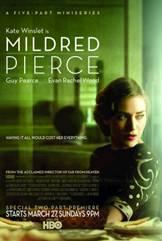
Mildred Pierce is the Mother of All Bad Relationships

When is that moment of bittersweet clarity when you realize—truly realize, learn, concretize, absorb—that the relationship you were in really isn’t what you thought. Omar Khayyám famously wrote:

“The Moving Finger writes; and, having writ,
Moves on: nor all thy Piety nor Wit
Shall lure it back to cancel half a Line,
Nor all thy Tears wash out a Word of it."

But does it move on? Or does it press that omniscient digit down on our skulls until we become inkblots of despair? Tiny little Rorschachs of blood waiting for that lover, preacher, teacher, boss, spouse or child to interpret the very drips and drops of our truncated lives. I think life has a way of making us revisit things that we didn't deal with ultimately and completely. A High Noon showdown where we inhabit The City on the Edge of Forever constantly watching—either by apathy or design—our beloved Edith Keeler die a horrible and painful death. Why? because we know it is the right the do. Or hope we know that it’s the right thing to do.

This was no truer than in the HBO Miniseries Mildred Pierce, staring Kate Winslet, Evan Rachel Wood and directed by Todd Haynes. This weepy sudser was not so much a remake but a retelling of the original book by James M. Cain. My problem with this lovely period drama was: Mildred’s inexhaustible skill at enduring bullshit. First her husband’s philandering, then her youngest daughter’s sudden death (while she was indisposed with her lover having unbridled sex at his beach house) to finally Veda, her oldest daughter’s sociopathy. I usually love Kate Winslet in everything she does, but I didn’t like the anemic obsequence her character took toward the end of this monstrously long 6-hour miniseries. Unlike Joan Crawford’s balls-out bravura performance in her Oscar winning turn as Mrs. Pierce, Miss Winslet’s Mildred became milquetoast when her demon seed daughter activated her evil powers. From tantrums to insults, manipulation to grandeur Veda was a pouting purveyor of perfect petulance. She stole money, status, the spotlight and ultimately Mildred’s second husband. Ronald Guttman as Carlo Treviso, her voice teacher, sums Veda’s character up—in what becomes this version’s memorable Eve Arden alligator quote; he says, “[Veda] Is snake. Is bitch. Is coloratura. For me, I no like snakebite.”

I know Mr. Haynes loves Douglas Sirk, but Mildred chasing Veda’s taxi while inconsolable and in tears in the climatic scene of the miniseries did not bring me one-tenth of the emotional heartbreak I felt when watching Sarah Jane (another thoroughly detestable child) throw open the doors to the hearse of her long-suffering, now dead mother, and cradle the casket sobbing “Mama!” in the 1959 classic Imitation of Life. (Go to 5:40 or just watch Mahalia sing and let the teears flow)

But I beg to ask the question, Why Mildred why? What is it about the human mind that we can overlook such horror and injustice in people we love? I’ve asked similar questions before. Is life just some set of random occurrences or is there a divine plan? Do you believe in predestination? I discussed that topic sometime ago here. Is tragedy like some pre-existing disease just waiting in our genetic code for just the right moment of hysteria to burst forth like an inviolable monster that can’t be stopped? And why is long-suffering such a virtue? We see it time and time again in literature and legend. Jesus Christ suffered on the cross and died for our sins. The First Noble Truth of Buddhism states Life is Suffering. In my first novel Solstice, Solstice herself uses suffering and our human connection to it as a way to advance her nefarious schemes. Going so far as to use sympathy to further her path after she’s murdered the wife of her benefactor.
The comfort she would give to The Good Doctor. The “just right” flush of melancholy grief she would have on her face when the other families of The Circle drew near to mourn one of their own. People would say, “She is so strong, trying to conceal her pain,” and, “It’s a blessing The Good Doctor has her around.” They would touch her face with the back of their wool gloves and hold her hand. The men, who normally averted their eyes away from her in fear of seeming lustful, will take her small hands in both of theirs, giving her a hug. She planned just the right spot on their faces to kiss and just the proper intonation of “Thank you so very much, for your sympathy.” It will be such a sublime fiasco.


These unhealthy relationships have been a tenant of creative expression since we started painting caves. Remember Medea—no not Tyler Perry’s gun-totting drag alter ego—but Euripides’ scorned woman hell-bent on killing her own children to spite a former lover. Ostensibly this double helix of pathology is not broken when the relationship is severed. When one person chooses to leave or if God forbid somebody dies, there is dissatisfaction in the outcome. Are these pangs in our chest for these attachments love, obsession or worse: obligation. There was a moment of true fear in Mildred Pierce. Upon an umpteeth reconciliation between mother and child, Mildred enters Veda's bedroom to see the pretty red-headed jinn asleep. She watches Veda lustfully wanting her child to love her as dogmatically as she does her offsrping. The impulsively she kisses Veda on the lips. It was beautiful, frightening, disgusting, carnal. In that tiny lurid little moment I saw the underlying sickness of both women. The obsessive over-indulged child forever bound to the fearful needy mother.

But what of love? Is it some all-binding taffy that pulls and entwines us together to the point that our empty hearts become filled with the codeine of attention, even if its bad. Was Mildred so lonely and guilt ridden that the emotional atrocities Veda brought on her were somehow tolerable? Are these the emotions a woman feels when she puts her life and her children’s lives in danger by staying with an abusive man? My mother always says to me “Well at least you’re alive.” So what’s the alternative? Death. Is there no middle ground between long-suffering heartache and just simply not breathing. Are we so afraid of change that we equate it with dying? Sometimes you have to say enough is enough. Cauterize your wounds and move on. Or you can be virtuous and long suffering and maybe one day somebody will right a book about you. It’s like that old expression; if you're born to be hanged, then you'll never be drowned. As in my earlier reference to Star Trek if only we could be Vulcan. They have excised all emotional baggage from their culture. Cool logic prevails. But wait… they only mate every seven years. Maybe I’ll rewatch Mildred Pierce again, it should take just about that long.